As hairdressers, we’ve touched thousands of scalps.
Over the years, that’s meant encountering every type imaginable — dry, oily, itchy, stressed, flaky, inflamed, and everything in between.
Even with all those variations, I can say this with confidence:
Most people spend hundreds on haircare, but almost nothing on scalp care… and then wonder why their hair won’t grow, won’t shine, or won’t behave.
So, Is Your Scalp Really That Important?
Here’s the truth (and I say it with love):
Your scalp is the foundation of every healthy strand.
After all, you can’t grow a thriving garden in dry, irritated soil, so it makes sense that your hair won’t reach its full potential if your scalp is struggling.
In this guide, I’m going to take you through:
> The science of scalp health
> Root causes of flakes, thinning, itchiness, and inflammation
> What hairdressers really see happening at the root level
> How your scalp microbiome works (and why it’s trending in 2026)
> What products ACTUALLY help
> Suggested routines you need weekly, monthly, and seasonally
> The hacks that genuinely support hair growth
> And what to avoid at all costs
Whether you’re struggling with thinning hair, slow growth, dryness, product buildup, or dandruff, moreover, if your goal is thicker, healthier hair, this post has everything you need.
First, we’ll break down the real science behind hair and scalp health, and then we’ll dive into practical tips that actually work.
SECTION 1: WHAT EXACTLY IS SCALP CARE?

When clients ask me, “Do I really need scalp care?” my answer is always the same:
If you have hair, you need scalp care. If you want MORE hair, you need it even more.
Scalp care refers to all the habits, treatments, and products designed to:
-
Keep your scalp clean
-
Maintain moisture and oil balance
-
Strengthen the skin barrier
-
Support the scalp microbiome
-
Reduce inflammation
-
Encourage healthy hair growth
-
Minimise shedding and breakage
Think of it as skincare for your head — because that’s exactly what it is.
And yet, most people treat their scalp worse than their elbows.

SECTION 2: THE SCIENCE — WHY YOUR SCALP IS SO IMPORTANT

1. Your Scalp Has Over 100,000 Hair Follicles
Every strand on your head grows from a tiny follicle.
Follicle health plays a direct role in how hair grows and behaves, including:
- Hair may grow at a slower rate
- Strands can become thinner
- Breakage tends to occur more easily
- Shedding may increase.
Healthy scalp = healthier follicle = healthier hair.
2. Your Scalp Produces Sebum — and It Matters
Sebum (your natural oil) protects your scalp AND your hair.
Too much sebum, however, can cause limp hair, greasy roots, dandruff-like flakes, or even seborrheic dermatitis.
On the flip side, not enough sebum leads to dryness, itchiness, roughness, dullness, and brittleness.
A balanced scalp is a happy scalp.
3. Your Scalp Has a Microbiome — and It Affects Everything
Just like your gut, your scalp has a community of microorganisms that:
-
Protect against harmful bacteria
-
Break down oils
-
Manage inflammation
-
Maintain pH
-
Support healthy follicles
When your microbiome is out of balance, you get:
-
Itchiness
-
Dandruff
-
Inflammation
-
Hair thinning
-
Slow growth
-
Sensitivity
-
Oil imbalance
Scalp care supports this delicate ecosystem.
4. Blood Flow = Growth
Each follicle depends on blood flow. Stress, tension, build-up, inflammation, and even dehydration can restrict circulation.
That means less nutrients.
💥Less oxygen.
💥Less growth.
Scalp massages aren’t a trend — they’re biology.
SECTION 3: WHAT HAIRDRESSERS REALLY SEE — THE TOP SCALP ISSUES
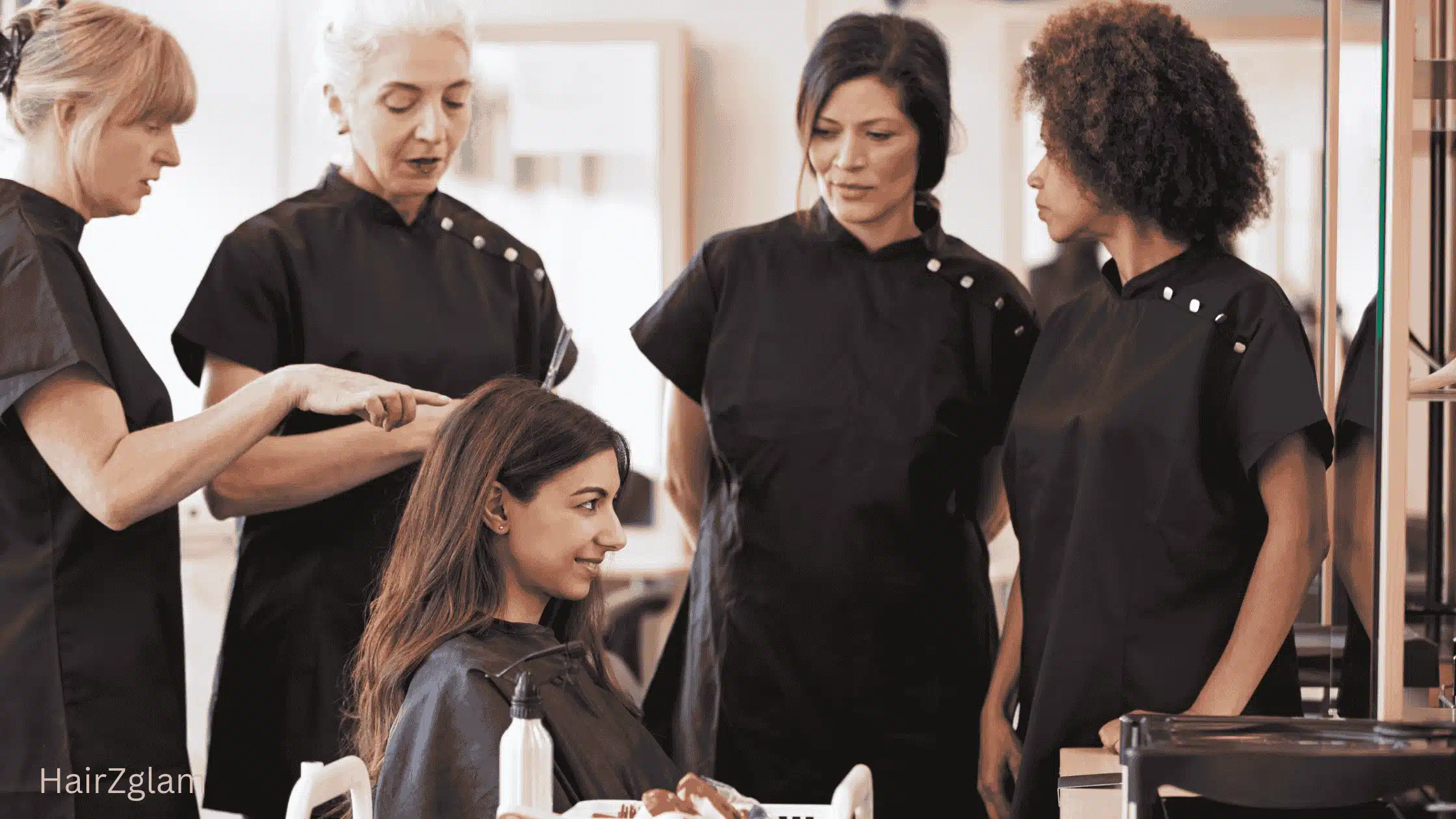
As hairdressers, we have the advantage of physically touching your scalp regularly.
Here are the most common issues we see:
1. Product Buildup (THE #1 PROBLEM)
Thanks to dry shampoo, hairspray, mousses, oils, serums, and creams, most people accumulate layers of buildup that are rarely washed out completely.
As a result, the follicles can become clogged, and consequently, hair growth slows down dramatically.
Signs of build-up:
-
-
Greasy no matter what
-
Flat roots
-
White or yellow flakes
-
Itchy scalp
-
Hair feels coated
-
Advertisment
2. Dry, Flaky Scalp
Often mistaken for dandruff, this is usually caused by:
-
Harsh shampoos
-
Overwashing
-
Hard water
-
Weather
-
Stress
-
Hormones
3. Dandruff (actual dandruff)
Dandruff is caused by Malassezia, a yeast that lives naturally on your scalp.
When it becomes overactive, you get:
-
Oily flakes
-
Itching
-
Irritation
4. Seborrheic Dermatitis
This condition is essentially dandruff’s angrier cousin, appearing as thicker flakes, noticeable redness, and persistent inflammation.
At the same time, inflammation around the follicles acts as a silent hair-thinning culprit, and over time, it can shrink follicles while weakening new hair growth.
5. Follicle Inflammation (super common)
This is the silent hair-thinning killer.
Inflamed follicles shrink over time, producing weaker hair.
Why it happens:
-
-
Stress
-
Product buildup
-
Tight hairstyles
-
Heat tools
-
Low-grade infection
-
Hormones
-
6. Hormonal Hair Changes
Especially common in:
-
-
Postpartum women
-
Women in perimenopause
-
Those with PCOS
-
Anyone under chronic stress
-
SECTION 4: THE BIG MYTHS ABOUT SCALP CARE (STOP BELIEVING THESE)

Itchy scalp = you need more moisture. Often, itchiness is caused by buildup or yeast imbalance, not dryness.
Oily hair doesn’t need scalp treatments. Oily scalps often need the most structured care.
Hair growth oils make your hair grow. Oils only support scalp health—they cannot create new follicles.
You should only wash once a week. For most people, this leads to buildup, flakes, and irritation.
SECTION 5: THE PERFECT SCALP CARE ROUTINE (HAIRDRESSER-APPROVED)

Detox Cleanse (Weekly) – Use a clarifying shampoo to remove dry shampoo, styling products, pollution, hard water minerals, and sebum buildup. This opens up follicles and resets scalp balance.
Gentle Shampoo (2–4 Times Per Week) – Choose a shampoo based on scalp type:
-
Oily scalp: lightweight, balancing, non-creamy
-
Dry scalp: hydrating, barrier-repairing
-
Itchy scalp: anti-inflammatory, soothing
-
Dandruff: medicated or anti-fungal
Use fingertips, not nails, to avoid microtears.
Condition Mid-Lengths Only – Applying conditioner directly to the scalp can lead to buildup, excess oiliness, flattened roots, and even irritation of the follicles.
Instead, focus on the mid-lengths and ends to nourish hair without compromising scalp health.
Scalp Toner or Serum (2–3 Times Per Week) – Look for ingredients such as niacinamide, peppermint, hyaluronic acid, salicylic acid, glycolic acid, tea tree, rosemary extract, caffeine, or peptides.
These help support circulation, control inflammation, maintain hydration, manage dandruff, balance oil, and promote healthy growth.
Additionally, consistent use reinforces scalp resilience and follicle strength.
Scalp Massage (Daily or Every Wash) – Just two minutes is enough.
By massaging, you increase blood flow, reduce stress hormones, stimulate follicles, and encourage the hair growth phase.
You can use your fingers or a silicone scalp brush to maximize benefits.
Reduce Tight Hairstyles – Styles like high ponytails, braids, or slicked buns can cause traction alopecia over time.
Therefore, it’s best to give your scalp a break and alternate looser styles regularly.
Avoid Overheating the Scalp – Hot tools touching the roots can weaken keratin and irritate follicles.
Consequently, always use a heat protectant and avoid excessive direct heat on the scalp to preserve hair health.
SECTION 6: INGREDIENTS THAT ACTUALLY WORK (BACKED BY SCIENCE)

Salicylic Acid – Great for buildup and clogged follicles. Gently exfoliates without scratching.
Glycolic Acid – Helps with flakes, dryness, and turnover.
Niacinamide – Reduces redness, regulates oil, strengthens scalp barrier.
Peppermint Oil – Shown to increase blood flow and support hair growth.
Caffeine – May stimulate follicles and slow shedding.
Peptides – Support strength and density.
Hyaluronic Acid – Hydrates the scalp skin directly.
Ketoconazole (for dandruff) – Scientifically proven to reduce fungus and inflammation.
SECTION 7: SCALP CARE FOR HAIR LOSS & THINNING
If you’re noticing thinning, shedding, or widening of your part, here’s the hairdresser + science plan:
-
Clarify weekly: Blocked follicles can’t grow well.
-
Use a growth-supporting serum: Look for caffeine, peptides, or rosemary extract.
-
Increase scalp massages: Daily if possible.
-
Reduce stress: Cortisol impacts hair growth cycles.
-
Micro-exfoliate once a week: Gently, with acids, not scrubs.
-
Check for inflammation: Redness, soreness, or burning = inflamed follicles, which slows growth.
Read more about Thinning hair and Alopecia HERE
SECTION 8: HOW YOUR LIFESTYLE AFFECTS YOUR SCALP
Stress – Stress can push hair into the “falling out” phase prematurely.
Diet – Your scalp needs: protein, zinc, iron, B12, omega-3s, and vitamin D.
Sleep – Follicles recover overnight; poor sleep affects growth.
Medications – Certain medications affect oil balance, shedding, and dryness.
Hormones – Menopause, postpartum, stress, and birth control all impact scalp and hair cycles.
Read more about Menopause HERE
SECTION 9: HOW TO KNOW WHAT YOUR SCALP TYPE IS.

Oily Scalp – Greasy within 24–48 hrs, flat roots, waxy buildup. Solution: Lightweight shampoos, regular washing, salicylic acid.
Dry Scalp – Tightness, small flakes, rough texture. Solution: Hydrating serums, gentle shampoos, hyaluronic acid.
Sensitive Scalp – Burns easily, reacts to products, redness. Solution: Fragrance-free products, niacinamide.
Dandruff Scalp – Yellowish flakes, oily roots, itching. Solution: Anti-fungal or medicated shampoos.
SECTION 10: WEEKLY SCALP CARE ROUTINE (2026 VERSION)
Monday: Gentle wash + serum
Wednesday: Detox shampoo + massage
Friday: Gentle wash + scalp toner
Sunday: Rest or light massage
SECTION 11: MISTAKES MOST PEOPLE MAKE (AND HOW TO FIX THEM)
-
Using nails while shampooing → causes microtears and irritation.
-
Leaving shampoo in for only a few seconds → shampoo needs ~1 minute to work.
-
Overusing oils → traps dirt and yeast.
-
Hard water not treated → mineral buildup blocks follicles.
-
Not rinsing properly → leftover shampoo irritates scalp skin.
Conclusion:
HEALTHIER SCALP = HEALTHIER HAIR — IT’S THAT SIMPLE
Your scalp is the foundation of every good hair day and every bad one.
Supporting it transforms your hair:
-
Faster growth
-
Fuller roots
-
Flake-free scalp
-
Reduced itchiness
-
Easier styling
-
Longer-lasting clean hair
-
Improved shine
-
Less breakage
-
Slower thinning
As a hairdresser, I’ve seen countless clients completely transform their hair simply by putting scalp care first. I
nterestingly, many people overlook this essential step, believing that healthy hair depends only on shampoo, conditioner, or styling products.
However, scalp care is far more than a trend or passing fad; it is grounded in science, built on proper maintenance, and often serves as the missing link in most hair routines.
Moreover, when you treat your scalp well, your hair responds naturally, becoming stronger, shinier, and easier to manage every single day.
Advertisment